Trying to choose between a brand-new home and an older neighborhood in Morristown? You are not alone. Many buyers find themselves torn between the ease of new construction and the charm and flexibility of established areas. The good news is that Morristown offers both, and each option can fit a different lifestyle, budget, and long-term plan. Let’s break down what matters most so you can focus your search with more confidence.
Morristown offers both newer and older options
Morristown is a mid-sized city in Hamblen County with 30,431 residents, according to the 2020 Census. QuickFacts also reports an owner-occupied housing rate of 54.9%, a median owner-occupied home value of $181,100, and median gross rent of $882. More recent market trackers place home prices roughly in the mid-$200,000s to low-$300,000s, depending on how the data is measured.
One reason this choice feels so real in Morristown is the mix of housing stock. In ZIP code 37814, census-based reporting shows that only 9% of homes were built before 1990, while 65% were built from 2010 forward. That means you are likely to see both older in-town homes and a meaningful number of newer builds during your search.
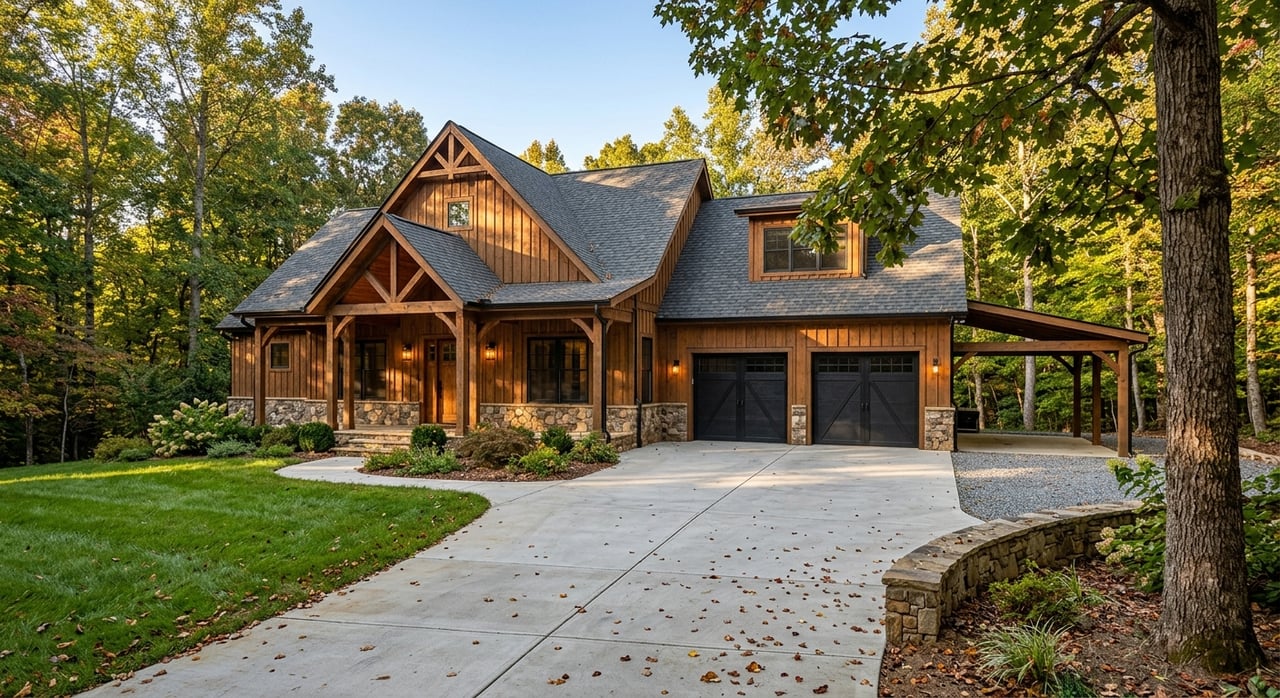
What new construction in Morristown looks like
New construction in Morristown tends to cluster in growth areas rather than the older downtown core. Local planning records point to activity around Lost Creek Drive, Southwood near Valley Home Road and Highway 160, and north Morristown off Noe’s Chapel Road. Communities mentioned in planning materials include Windswept, Southwood, and Millstone Village.
In many of these neighborhoods, the experience is built around predictability. You will often find newer systems, similar floor plans, standardized finishes, and a more uniform streetscape. For many buyers, that can make the shopping process feel simpler and less risky.
Lot sizes in newer communities
Newer subdivisions do not all look the same, but they often lean toward more standardized lot sizes. Planning minutes for one Southwood phase noted lot sizes ranging from about 5,900 to 28,000 square feet, with an average near 8,400 square feet. Millstone Village listings show a typical homesite around 7,405 square feet, while Windswept lots are closer to 0.51 to 0.52 acres.
That range matters because a "new construction neighborhood" can mean very different things. One community may offer a compact, easy-care lot, while another may give you more elbow room along with added neighborhood amenities. Looking at the actual lot size, not just the age of the house, can help you compare options more clearly.
Finishes and features you may see
Builder materials for local communities such as Southwood and Millstone mention features like shaker-style cabinetry, granite or solid-surface countertops, stainless Whirlpool appliances, LED lighting, architectural shingles, smart-home packages, and lower-maintenance exteriors like vinyl siding, sod, and professional landscaping. These features can appeal to buyers who want a home that feels current without taking on projects right away.
The tradeoff is customization. Unless you are buying early enough in the build process to choose some finishes, you may have fewer opportunities to personalize the home before closing. If design flexibility matters to you, that is a good question to ask upfront.
HOA fees and rules in newer neighborhoods
A major part of the new-construction conversation in Morristown is the HOA structure. The fee and amenity picture is mixed, not one-size-fits-all. Millstone Village lists annual dues of $156, Southwood listings show about $25 per month or $300 annually, and Windswept has $75 monthly dues.
Those fees support different things depending on the community. Windswept, for example, advertises gated access, a clubhouse, tennis courts, a pool, a boat ramp, and slips. In a neighborhood like that, you are paying for more than appearance standards alone.
You should also remember that HOA rules may affect what you can do with the property. Millstone Village guidelines require written approval before many exterior changes. Before you make an offer, it is smart to review the current covenants, restrictions, and fee schedule.
What established neighborhoods tend to offer
Established Morristown neighborhoods usually offer more variety than builder-driven subdivisions. Instead of rows of similar homes, you may see a broad mix of ages, styles, lot sizes, and layouts. For buyers who value individuality and neighborhood character, that can be a major plus.
The downtown historic district is one of the clearest examples. Visit Morristown describes it as a walkable area with shops, restaurants, the Downtown Green, the Rose Center, and recurring events. Homes in the older core span many decades, with listing examples from 1907, 1910, 1917, 1950, and 1956.
Lot size and layout can vary more
Older neighborhoods tend to have less uniformity. Listing examples in and around established Morristown areas include homes on 0.10-acre, 0.22-acre, and 0.34-acre lots, along with a 1.01-acre double lot in Seven Oaks. That kind of range is harder to find in a typical newer subdivision.
If you want a corner lot, a deeper yard, a detached garage, a mature landscape, or a home with an unusual floor plan, older neighborhoods may give you more choices. At the same time, that variety means you need to evaluate each property on its own merits rather than assume every home on the block will offer the same setup.
Downtown access and walkability
If being closer to downtown matters to you, established neighborhoods may stand out. Morristown as a whole is considered minimally walkable, and the local road network is strongly shaped by U.S. 25E, U.S. 11E, and Interstate 81 access. For many residents, driving is still a big part of daily life.
That said, the downtown historic district offers a more walkable setting than many newer, highway-oriented subdivisions. If you like the idea of being near local shops, restaurants, public spaces, and community events, older in-town areas may deserve a closer look.
The hidden factor: infrastructure and utilities
The biggest difference between new and established homes is not always cosmetic. In Morristown, infrastructure can be one of the most important parts of the decision. This is especially true if you are comparing city neighborhoods with outlying areas or older subdivisions.
Sewer versus septic matters
Hamblen County subdivision rules allow septic systems when a property is more than 2,000 feet from public sewer. In those cases, the minimum residential lot size is 20,000 square feet, and existing septic locations must be documented on plats. That may not affect every buyer, but it is an important detail when you are looking at older homes or properties outside newer city-served subdivisions.
City planning minutes also reference a 1955 subdivision where homes built in the early 1960s relied on septic systems, and staff noted that those systems were deteriorating and expensive to replace. If you are considering an established property, confirming sewer or septic status early can save you time and help you budget more accurately.
Utility and service boundaries can differ
Service responsibilities can also change from one area to another. Morristown Utility Systems provides electric, water, wastewater, and FiberNET service in the city. Hamblen County handles garbage collection and road maintenance on county roads that are not maintained by the city or state.
That means two homes with similar prices may come with different service setups depending on where they sit. When comparing homes, ask who provides utilities, who handles trash pickup, and which government entity maintains the road.
Which choice fits your priorities?
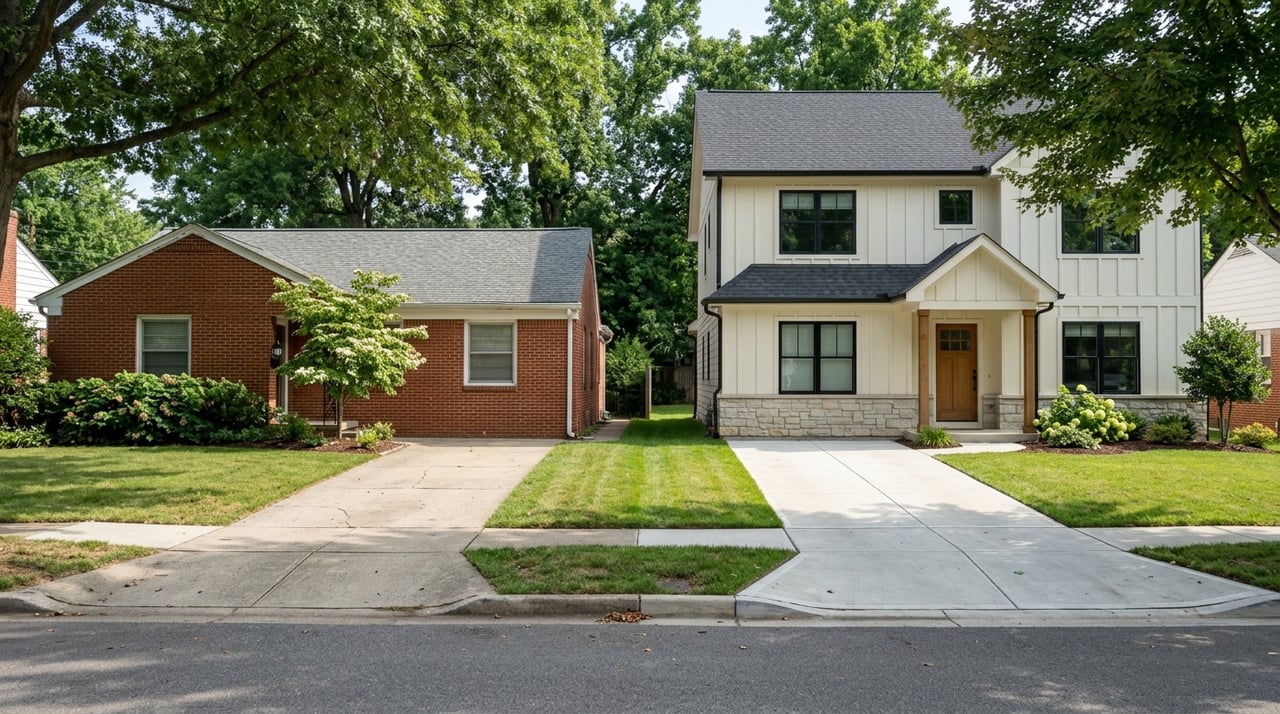
In Morristown, the real choice is often not simply new versus old. It is standardized versus variable. Newer communities tend to offer newer systems, more predictable finishes, modest lot sizes, and HOA-managed appearance standards. Established neighborhoods often bring more character, more lot-size variety, and better access to the downtown core.
New construction may be the better fit if you want:
- Lower near-term maintenance
- A simpler move-in process
- Modern finishes and systems
- Clear HOA standards
- A more predictable neighborhood layout
Established neighborhoods may be the better fit if you want:
- Character and vintage appeal
- More varied lot sizes
- A chance to find a remodeled older home
- Closer access to downtown amenities
- More flexibility from one property to the next
Neither option is automatically better. The right fit depends on how you want to live, how much upkeep you want to take on, and how much variability you are comfortable evaluating during the buying process.
Smart questions to ask before you buy
Whether you lean toward a brand-new build or an older home, a few local questions can help you compare homes more carefully.
Ask these before you move forward:
- Is the home on city sewer or septic?
- Who provides electric, water, wastewater, and internet service?
- Who handles trash pickup and road maintenance?
- What are the current HOA dues and rules, if any?
- Are exterior changes subject to approval?
- How large is the lot, and how usable is it?
- Is the location more car-oriented or closer to downtown amenities?
These questions may sound simple, but they often reveal the real day-to-day differences between one home and another.
If you are buying from out of the area, this step matters even more. Morristown has enough variation in neighborhood style, utilities, and property setup that local guidance can make your search much more efficient.
If you want help narrowing down the right fit in Morristown or anywhere across East Tennessee, Jo Schultheiss can help you compare neighborhoods, property types, and local details so you can move forward with confidence.
FAQs
What is the main difference between new construction and established neighborhoods in Morristown?
- In Morristown, new construction usually offers more standardized finishes, newer systems, modest lot sizes, and HOA rules, while established neighborhoods often offer more character, lot-size variety, and access to the downtown core.
Where are new construction homes located in Morristown?
- Local planning records show new construction activity around Lost Creek Drive, Southwood near Valley Home Road and Highway 160, and north Morristown off Noe’s Chapel Road.
Do new construction neighborhoods in Morristown have HOA fees?
- Many do, but the cost varies by community. Research examples include Millstone Village at $156 annually, Southwood at about $300 annually, and Windswept at $75 per month.
Are older Morristown homes more likely to have septic systems?
- Some established properties, especially outside newer city-served subdivisions, may rely on septic systems. That is why buyers should verify sewer or septic status early in the process.
Is downtown Morristown more walkable than newer subdivisions?
- The downtown historic district is described as walkable and includes shops, restaurants, the Downtown Green, the Rose Center, and recurring events, while Morristown overall is considered minimally walkable and more car-oriented.
What should buyers verify before making an offer in Morristown?
- Buyers should confirm HOA fees and rules, review recorded covenants, check whether the home is on city utilities or septic, and verify who handles trash pickup and road maintenance.