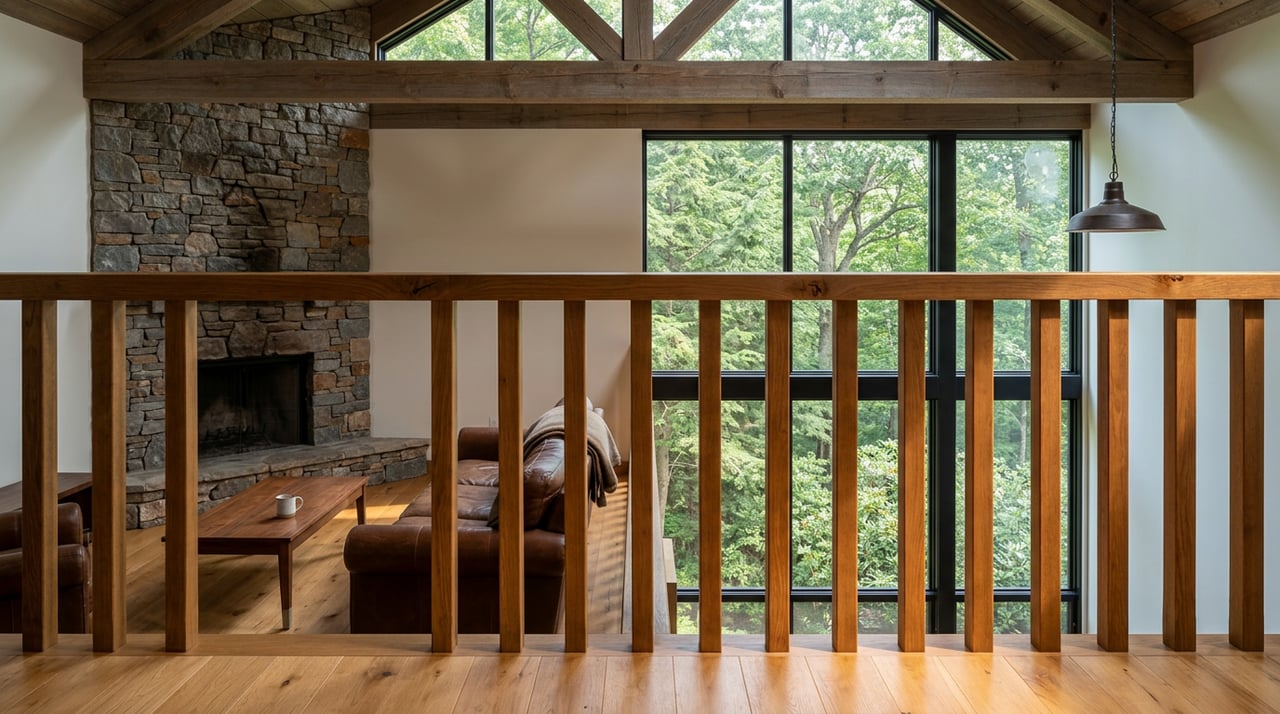
A six-bedroom cabin listed as "sleeps 20" looks like a straightforward math problem. Six bedrooms, plenty of bunk rooms, a game room with a pull-out sofa, add it up and you get a number that matches the marketing photos. Then you call the City of Pigeon Forge to confirm your rental permit and find out the cabin's legal occupancy tops out at 12. Nobody lied to you. The listing described what the house can physically hold. The city regulates something different: how many people you're allowed to charge for a night.
That gap between what a cabin sleeps and what it can legally rent is the first of two numbers that matter more than anything on the spec sheet. The second is a date. Get either one wrong and you can close on a cabin that can't do the job you bought it to do.
The Occupancy Math the Photos Don't Show
Pigeon Forge doesn't count bedrooms when it sets your rental cap. It counts beds, and it applies a formula: two guests per bed, two beds per room, and an overall property maximum of 12 people, regardless of how many bedrooms the floor plan shows. A cabin can have eight bedrooms and still cap out at 12 rentable guests under that formula.
Here's what that means in practice for underwriting a purchase:
| Bedroom count | What listings often market | Legal cap without added life-safety systems |
|---|---|---|
| 3 BR | Sleeps 8-12 | Up to 12 |
| 5 BR | Sleeps 16-18 | 12 unless upgraded |
| 7 BR | Sleeps 20+ | 12 unless upgraded |
Once a property's true occupancy crosses into the low teens, a separate layer of the fire code kicks in. Under the life-safety rules that govern short-term rental units across Sevier County, a property that is more than three stories above grade, more than 5,000 square feet, or built after February 1, 2016 and sleeping 13 or more people has to install a sprinkler system to legally host that many guests. That's a real construction cost, not a paperwork fee, and it's the kind of thing that should show up in your offer price if a seller is marketing a cabin at a guest count the building can't yet support.
If you're running numbers on a large cabin, ask for the property's current STRU permit and the occupancy figure printed on it. Don't back into revenue projections using the bedroom count from the listing photos.
The Date That Decides Whether a Cabin Can Rent at All
The occupancy formula only matters if the cabin is allowed to rent short-term in the first place, and that turns on zoning. Pigeon Forge restricts new short-term rental development in its R-1 residential districts. A cabin sitting in R-1 today can only operate as a short-term rental if it was already doing so, with a valid permit, before a specific date: August 13, 2018.
That cutoff comes from Ordinance 1065, which added Section 511 to the city's zoning code. The rule doesn't grandfather the property in because it's old or because it looks like every other cabin on the street. It grandfathers in a use, tied to a permit that had to exist before a date that's now nearly eight years in the rearview mirror. If a house in R-1 was a full-time residence in 2018 and someone converted it to a rental later, no amount of renovation or rebranding brings it back into eligibility. The exemption closed the day the ordinance passed.
For a buyer, this means the zoning district on the property card isn't the whole story. Ask directly whether the cabin held an active short-term rental permit before August 13, 2018, and ask to see it. A seller who can't produce that documentation for an R-1 property is telling you, whether they mean to or not, that you may not be able to rent the house you're about to buy.
The Permit Stack You Won't See at the Showing
Assuming the zoning and occupancy check out, Pigeon Forge layers several separate registrations on top of each other, each with its own fee and renewal cycle:
- City business license: base application fee of $35, plus $3 per $1,000 of gross receipts
- Transient rental registration: $125 to register, $75 annually to renew
- STRU permit: $300 application fee
- Fire safety certification: $75 for the initial inspection, $50 for annual re-inspection
None of these fees will sink a deal on their own. Where buyers get caught is assuming one permit covers the whole operation. It doesn't. A cabin can have a current business license and still be out of compliance on its fire safety certification, or hold a valid STRU permit from a previous owner that doesn't automatically transfer to you at closing. Confirm each piece separately, not just the existence of "a permit."
Your Mailing Address Isn't Proof of Jurisdiction
Here's a wrinkle that trips up buyers who assume the address on the listing tells them which rulebook applies. A cabin can carry a Pigeon Forge mailing address and still sit in unincorporated Sevier County, outside the city limits entirely, which means the county's short-term rental program applies instead of the city's. Sevier County runs its own permit process for STRUs outside city limits, with more than 6,500 units currently registered under it, according to the county's own program page. The rules aren't identical to the city's, and the mailing address alone won't tell you which one governs your property.
The fix is simple but easy to skip under contract deadlines: verify the parcel's actual jurisdiction before you assume Pigeon Forge's occupancy formula, fee stack, or zoning rules apply. A five-minute lookup can save you from filing for the wrong permit type entirely.
The Tax Bill That Changes the Day You Get a Business License
One more mechanism worth underwriting before you write an offer. Once a property carries a business license and isn't the owner's principal residence, Sevier County can reclassify it from a 25 percent residential assessment ratio to a 40 percent commercial ratio for property tax purposes. The tax rate itself doesn't change, but the assessed value the rate applies to goes up substantially, which raises your annual tax bill in a way that a generic mortgage calculator won't flag. Model this against your projected revenue before you close, not after your first tax notice arrives.
Before You Write an Offer
Pull these documents, in this order, before you commit earnest money on a Pigeon Forge cabin you plan to rent:
- The current STRU permit, with the occupancy number printed on it, not the marketed sleep count.
- Proof of the property's zoning district, and if it's R-1, documentation that it operated as a short-term rental with a valid permit before August 13, 2018.
- The Sevier County parcel lookup confirming whether the property sits inside Pigeon Forge city limits or in unincorporated county territory.
- Current status on the city business license, transient rental registration, and fire safety certification, since they renew separately.
- A tax estimate run against the 40 percent commercial assessment ratio, not the residential one, if you plan to operate the cabin as a non-owner-occupied rental.
None of these show up in the listing photos. All of them decide whether the cabin performs the way your spreadsheet says it will.
A cabin's rental potential in Pigeon Forge isn't set by its bedroom count. It's set by a permit file, a zoning map, and a date on an ordinance most buyers never ask to see. The properties that look identical from the driveway can be legally worlds apart once you check what's actually on file with the city and the county.
FAQ
Does a cabin's advertised rental income prove it's properly permitted? No. Documented booking history tells you what the property earned, not whether it's currently compliant. Ask for the permit number separately and verify it with the city or county rather than relying on payout screenshots alone.
Can I convert a house that's never operated as an STR into one if it sits in Pigeon Forge's R-1 zone? Generally no. The August 13, 2018 cutoff in Ordinance 1065 closed new eligibility in R-1 districts. A house without a documented STR permit predating that date is very likely a personal residence purchase only, not a rental conversion candidate, if it sits in R-1.
What if I want to rent to larger groups than the 12-person cap allows? You would need to bring the property up to the sprinkler and life-safety standard required for 13-plus occupancy, which is a construction project, not a permit application. Budget and timeline for that before assuming a big cabin's full bedroom count is rentable capacity.
Buying a short-term rental cabin in Pigeon Forge means underwriting the permit file as carefully as the floor plan. If you're weighing a specific property and want help pulling the zoning history, occupancy documentation, and jurisdiction details before you write an offer, Jo Schultheiss can walk through it with you and help you buy the cabin the paperwork actually supports.