Dreaming about a lake house in Dandridge? A beautiful view is easy to fall for, but on Douglas Lake, the smartest buyers look past the photos first. If you want a property that fits the way you plan to use it, whether for weekends, seasonal living, or a second home, you need to understand shoreline changes, dock rules, septic needs, flood concerns, and access. Let’s dive in.
Douglas Lake levels matter
Douglas Lake is a TVA-managed reservoir, not a static natural lake. According to TVA, the reservoir has about 28,420 acres of water surface and 513 miles of shoreline, and water levels normally vary by about 44 feet from summer to winter.
That seasonal swing can change how a property looks and functions. A lot that feels like prime waterfront in summer may have exposed shoreline, mud, or shallow access during winter drawdown. When you are buying a lakefront home in Dandridge, it is important to evaluate the shoreline at different times of year, not just on listing day.
Look at shoreline usability, not just views
A strong lake view is great, but it is only part of the story. You also want to know how usable the shoreline is when water levels are lower, how steep the bank is, and whether the path to the water still works during seasonal changes.
This is especially important for second-home and out-of-market buyers who may only visit once before making an offer. Photos taken at summer pool can make a property appear more accessible than it is year-round. That is why reservoir-front access should be part of your due diligence from the start.
TVA rules come first for docks
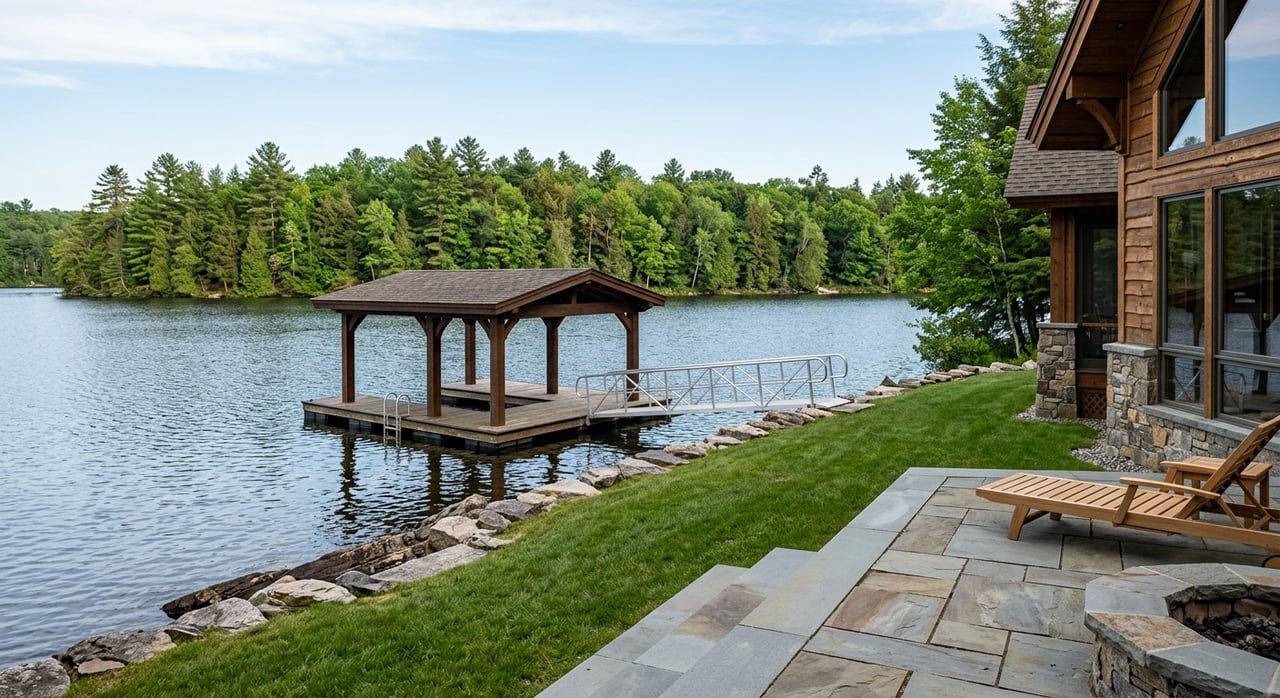
If a property has a dock, ramp, steps, walkway, seawall, or shoreline stabilization, TVA is a key authority. TVA requires a Section 26a permit before shoreline construction begins on TVA property, and not every waterfront lot has the land rights needed to even apply for a dock permit.
For buyers, this means you should not assume an existing dock is fully approved or transferable. Ask for the Section 26a permit, confirm the lot is eligible, and compare the permit to what is actually built on site. If something is missing from the permit, that is a red flag worth reviewing early.
Permit transfers are not automatic
TVA states that permits do not automatically transfer to a new owner. After closing, the new owner must apply within 60 days.
That timeline matters if dock access is one of your top priorities. If a property is being marketed as dockable or sold with an existing dock, verifying the permit status before closing can help you avoid surprises.
Dock size and design have limits
TVA also places limits on what can be built or maintained. Buyer guidance notes that second stories on docks may be open decks with railings, but they cannot be roofed or enclosed with siding or screening.
In new developments, TVA generally limits residential water-use facilities such as docks and piers to 1,000 square feet or less, although waivers may be available in some locations. This is another reason to confirm what is allowed on the specific lot instead of relying on assumptions.
Timing matters with shoreline permits
TVA says permit review can take up to 120 days. State water-quality permits or waivers may also be needed before TVA can issue a shoreline permit.
In practical terms, dock verification should happen before you make an offer or very early in your contract period. Waiting until the end of the transaction can leave too little time to address an issue.
Septic can make or break a lake lot
In many Dandridge-area lakefront purchases, septic feasibility is not a side detail. It can be central to whether the property is truly buildable or usable the way you expect.
Jefferson County Environmental Health handles septic permits for new construction. If a property is not in a subdivision, the county says buyers must provide a recorded plat map and a soil map, stake out the proposed house site before applying, and secure septic approval before moving to the building permit step.
If you are buying vacant land or a teardown lot, ask septic questions early. A parcel with a great view may still face limits if the site layout, soil conditions, or permit process do not support your plans.
Flood status affects planning
Lakefront living often comes with flood-related questions. If a property is inside the Town of Dandridge, the town’s building permit application asks whether the site is in a FEMA Special Flood Hazard Area and notes that a survey showing proposed buildings, setbacks, driveways, and easements may be required for some applications. An elevation certificate may also be required.
The town’s zoning ordinance includes an F-1 Floodplain District, and the official zoning map is the final authority for zoning status of land and water areas. Before you move forward, confirm whether the parcel falls in a mapped flood area and how that may affect your plans for improvements or rebuilding.
Buildable area may be smaller than it looks
One of the biggest mistakes lake buyers make is focusing on total acreage without checking usable upland area. Jefferson County subdivision regulations note that each lot must contain a building site not subject to flood, and property below the 1002 contour on Douglas Lake is not counted when calculating lot size.
That means the deeded acreage can overstate the part of the lot that is actually usable for a home site. On some waterfront parcels, the area you can build on is much smaller than you might expect from the listing description alone.
Setbacks and zoning need verification
Lakefront parcels do not all follow the same rules. Jefferson County’s building department FAQ lists different residential setbacks by district, including A-1 with 30-foot front setbacks and 10-foot side and rear setbacks, and R-1 with 30-foot front setbacks and 12-foot side and rear setbacks.
The county also notes that setback rules depend on property size. That is why buyers should verify the exact zoning district rather than assume one set of standards applies across all lakefront properties.
Town and county rules may differ
Some properties are inside the Town of Dandridge, while others fall under county jurisdiction. That can affect permitting, zoning, floodplain review, and site requirements.
Jefferson County’s zoning office advises buyers to call or visit the office to determine a property’s zoning district. For out-of-town buyers especially, this is an important step because a lake address can still fall under different layers of local rules.
Road access matters more than many buyers expect
A pretty drive down to the water does not always tell you everything you need to know. Jefferson County’s Highway Department issues new driveway permits for connections to county roads and asks owners to contact the office before construction.
Subdivision regulations also require roads to support access, including emergency access during flood conditions. If a property is served by a private or shared drive, buyers should confirm how access works, who maintains the road, and whether the setup makes year-round use practical.
A smart pre-offer checklist
Before you make an offer on a lakefront home or lot in Dandridge, it helps to slow down and verify the basics.
- Request the TVA Section 26a permit for every shoreline feature on the property.
- Confirm the lot has the TVA land rights needed for dock eligibility or permit transfer.
- Compare the permit documents to what is physically built on site.
- Verify septic feasibility, including soil map, permit status, and site-staking requirements.
- Confirm the zoning district, setbacks, and whether the property is in the town or county.
- Check whether the parcel is in a mapped flood area and whether an elevation certificate may be needed.
- Review road frontage, driveway permit needs, and access-road maintenance.
- Read any HOA or subdivision covenants carefully, since private rules may add restrictions beyond TVA and local requirements.
Why this matters for Dandridge buyers
Buying a lakefront home in Dandridge is about more than finding a beautiful place on the water. On Douglas Lake, the best purchase decisions come from matching the property’s legal and physical realities to the way you want to use it.
If you are buying from out of town, this kind of due diligence matters even more. A local guide who understands East Tennessee lake properties can help you ask better questions, spot issues sooner, and focus on homes that truly fit your goals.
If you want help sorting through Dandridge lake homes, dock questions, or remote-buying logistics, Jo Schultheiss can help you narrow the options and move forward with confidence.
FAQs
What should you check first when buying a lakefront home in Dandridge?
- Start with shoreline usability, TVA dock eligibility, septic feasibility, flood status, and road access.
Does every Dandridge waterfront property qualify for a dock?
- No. TVA says not all waterfront property has the land rights needed to apply for a dock permit, so eligibility must be verified.
Do TVA dock permits transfer automatically after closing?
- No. TVA says new owners must apply within 60 days because permits do not automatically transfer.
Why is septic so important for Dandridge lake property?
- Septic approval is often required before the building permit step, and on some lots it can determine whether the property is truly buildable.
Can total acreage on Douglas Lake overstate usable homesite area?
- Yes. Jefferson County regulations say property below the 1002 contour on Douglas Lake is not counted when calculating lot size, so usable buildable area may be smaller than deeded acreage suggests.
Do town and county rules differ for Dandridge lakefront property?
- Yes. Depending on whether the property is inside the Town of Dandridge or in unincorporated Jefferson County, zoning, permit, and floodplain requirements may differ.